Tank Encyclopedia's Archives
 A sub of Tank Encyclopedia. This is the new archive section, with all former entries, and a search engine.
 ➀ All single vehicles are accessible by nations and eras in a more consistent and logical way than previously. ADS are needed due to finance better server performances as audience grows. But you can support also it through merchandise here.
➁ New posts weekly. These are mere "entry into matter", for vehicles scheduled on tank-encyclopedia.com, that will be seen in the latter in much more detail. A link from the archive entry will point to the new article when up. There are still circa 2,000 serial armored vehicles to be treated over the years excluding prototypes and paper projects, so tank-afv.com will continue to run until all are treated, and follow the news of armoured vehicles around the world.
☄ About the site name: If a "Tank" is obvious to anyone in this context, "AFV" is an acronym which stands for "Armoured Fighting Vehicle". It is a catch-all definition for all military vehicles armoured (and armed), tracked or wheeled. For soft-skinned vehicles please visit truck-encyclopedia.com. See also The 2015 archive.
 Support Tank Encyclopedia on Patreon
New Entries
♆ 20/10/2026
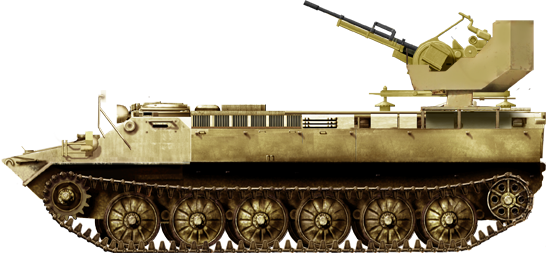
 Iraqi MT-LBV/ZPU-23-2 and others
Great Update of the Iraqi Page. Tons of new data, operations, battles, tactics, and missing vehicles used by the Iraqi Army between the cold war and to the Gulf war and beyond. Are seen here the BMP-1 Saddam, the BTS, variants of the MT-LB, BRDM-2, as well as the Ababeel, Sajeel, and Al-Raad weapons systems. The MT-LB/ZPU was makeshift Self-Propelled Anti-Aircraft Guns mounting ZU-23-2 23mm twin-barreled anti-aircraft autocannons into a welded turret to protect the operator, mostly used for ground combat against ISIS forces, albeit some saw action in the Second Gulf War (2003) and in the Battle of Mosul. Later field-modified variants with turret were likely based on the MT-LBV chassis. It could be also a partially enclosed armored structure, improvized in local workshop with rarely military grade plating.

♆ 14/10/2026
 Pantherturm (1944)
The Panzerturm ("armour turret" or "tank turret") was the generic name for a fully enclosed, armoured gun turret and mounting placed on a static fortification. It was also applied to any pre-fabricated steel dome built into a bunker line, like the machine-gun domes on the Siegfried Line, but mostly concerned the tactical recycling of obsolete, captured, or purpose-built tank turrets as dug-in defensive pillboxes. The design was simple but highly effective: a concrete or steel bunker structure (Bauform) was completely buried underground. The only part exposed above the surface was the low-profile tank turret. This provided static infantry or anti-tank units with heavy armor protection, excellent 360-degree fields of fire, and a target that was incredibly small and difficult for Allied artillery, naval bombardment, or aircraft to spot and hit.
♆ 07/10/2026
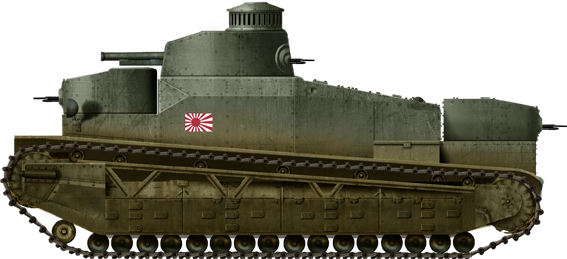
 Type 91/95 heavy tank Prototypes (1931-35)
During the 1930s, nations generally believed a new war will develop in the same lines as WWI and feared a new stalemate. So from 1930 there was a new fad, of multi-turret tanks as a possible solution, combining all types of artillery to deal with any threats along the way, at slow pace and protecting infantry to break the deadlock. Japan looked at the A1E1 Independent, Großtraktor and Neubaufahrzeug, Soviet T-35 of even the M2 Medium and in 1934 worked on the Type 95 Heavy Tank (Taipu 95-jū tanku) which went back to the Experimental Tank No.1 (Jikken tanku bangō wən) or Type 87 Chi-I Medium from 1927. In 1931 was built a more mature design, the Type 91, perfected into the Type 95. In total four of the second were built and evaluated but never given greenlight for production as in between more mobile, promising tanks were built instead.
WW1 Tanks & Armored Cars
Born in the Trenches, when the front became static, the idea of the tank was a resurgence of ...science fiction, when some looked at HG Wells' "land battleships" novel. In UK, development was stirred by Wintson Churchill and the Navy. In France, by an artillery officer, J.B. Estienne. And soon the world took notice. Tanks were rare and few in between still, with grand plans in 1918 that never were realized. When the front was not static, armored cars reigned supreme.
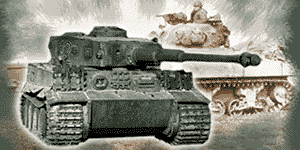
WW2 Tanks & Armored Cars
In 1939, thanks had nearly two decades to evolve at peacetime rate, though the boiling of new ideas of tactics and combined arms, with some armies more acute of these than any others. Ground combat proved absolute masters of these new ideas, the Wehrmacht, with luck and opposite incompetence. After moving to USSR, the fight moved to Africa, then to Italy and back to Western Europe at large, driving fast-paced innovation in a deadly food chain contest.
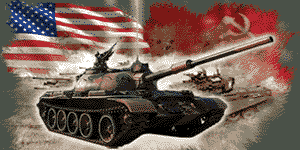
Cold War Armoured Fighting Vehicles
The atomic age started with the opposition of two superpowers, which developed deterrence but at the same time, always considered conventional warfare. Far from peaceful, this second half century, until 1991, saw gradual improvement, with a gap of twenty years before generations, towards 2nd, 3rd and 4th generation main battle tanks and a cohort of armoured personal carriers, infantry fighting vehicles, and many specialized variants, wheeled and tracked.
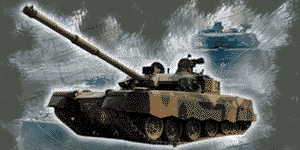
Modern Armoured Fighting Vehicles
As the recent conflict in Ukraine shows us, the tank is still useful in the frame of a conventional war. However drones unexpectedly showed deadlier as well as artillery. Between 1991 and 2026are we really seeing a radical transformation of ground warfare ? One thing is sure through for all generals: The main battle tank is still king of the battlefield, when well used and accompanied. From city scapes to desert, steppe, rolly hills and mountains, even coming from the sea, the tank adapted and is there to stay.
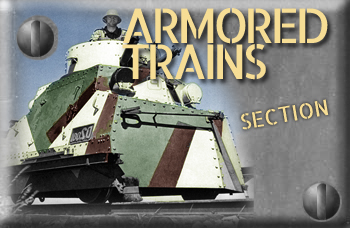
Armored Trains.
The New section in development
The same database as for tanks: Railroad networks developed in the XIXth soon found a military use. Before even WWI, train attacks led to armed and armored trains. This had going on for more than a century now. This will cover all WW1, WW2, but also cold war and even recent armoured trains on the long run.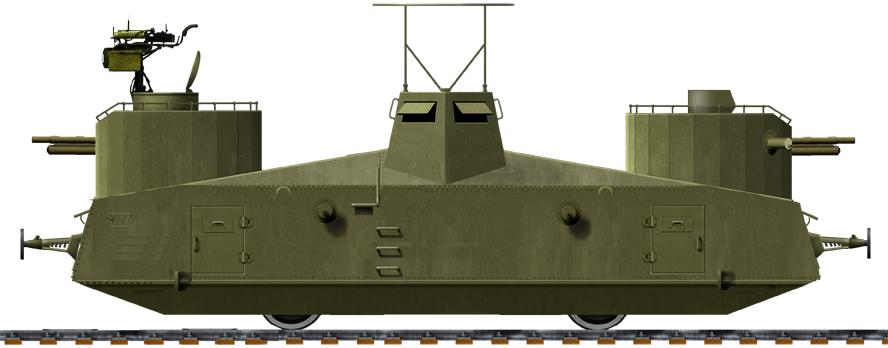
03/08.2026  MBV D-2 (1931)
A total of 31 production-model D-2 armored railcars were manufactured (plus one D3 and one D6) in 1932-39. During the fighting in the summer of 1941, NKVD railway security troops lost seven D-2 units; after repairs, the Germans incorporated them into their own armored trains. The remaining D-2s continued to be used by NKVD units until the end of the war and were decommissioned in the late 1940s. Full story.
Trucks
Military Trucks and staff cars.
A dedicated section for softskin vehicles, from WWI to this day: Trucks, staff cars, reconnaissance vehicles, and artillery tractors: Truck-Encyclopedia.com.
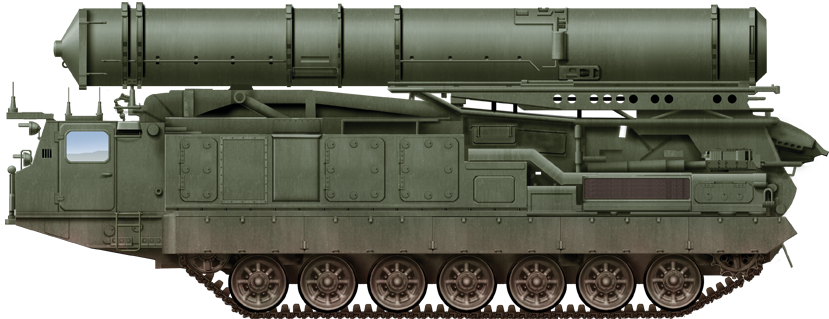
 9A83 TELAR (1983)
25.10.2026
The 9A83 is part of the S-300V combat system, as its primary tracked TELAR (erector launcher). It was the launch vehicle with illumination radar for 9M83 missiles, 4 per battery, in service by 1983 and now mostly retired. The whole program started in 1969, and state trials started in 1980-83. Both the 9A82 and 9A83 and other vehicles part of the combat system were in service at the same time. The S-300V1 as introduced comprised also the 9S457-1 Command post vehicle, 9S15 Obzor-3 early warning radar, 9S32-1 engagement radar. Netx came the S-300V in 1988 still counting the the 9A83.
2026 Entries:
Austin K30 (1938) * M29 Weasel * Renault AGK * Raupenschlepper Ost * Kamaz RB-341V Leer 3 (2015) * M76 Otter (1955) * Schwerer Wehrmachtschlepper * Brossel 780B TAL * Bedford OX (1939) * M116 Husky * Kasukha 4 (2010) * MAZ-630308-224 ("KN-13") * Leyland Hippo Mark II (1943) * LARC LX (1952) * Panhard K125 * GAZ-53 (1946) * Radschlepper Ost (1942) * PZInz-222 (1938) * AT-T (1946) * Fordson WOT * Renault AHR * 5P85TE2 TEL and S-400 Triumf (2007) * Henschel Type 33 (1928) * Kaiser Jeep M715 (1965) * Hotchkiss M201 (1954) * Kamaz Palantin-K Truck (2002) * SG-10 (1949) * Isuzu Type 94 (1934) * BAZ-6909 (1990) * White 704S (1939) * Morris Tilly (1939) * Kamaz Murmansk BN (2014) * UNIC P107 * DOK-M Heavy Dozer (1967) * 9A82 TELAR (1983) * M548 (1959) * Jackal (2007) *
The Antitank-Encyclopedia.
All the means to destroy a Tank.
From early antitank cannons and rifles to missiles, mines and RPGs.
 Obice da 210/22 M35
➾ gun produced from 1938, 85 total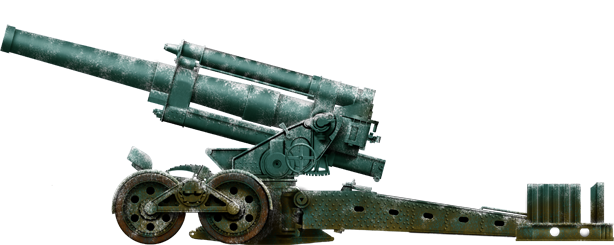
Author's rendition of the Obice da 210/22 M35 in Russia, 1942
The Obice da 210/22 modello 35 was an Italian heavy howitzer designed by the Italian Arms and Munitions Technical Service (STAM) and accepted into service by the Royal Italian Army in 1938. A total of 346 were ordered and the gun was produced by Ansaldo at their Pozzuoli factory. However production was slow and approximately 85 were produced by September 1943. After Italy surrendered Germany seized as many as they could and a factory in Northern Italy continued to produce a small number for the German Army. The carriage was split trail with four wheels which raised from the ground for firing and the gun was trunnioned under the breech to allow for maximum recoil and elevation.
Of course the Obice was not an antitank weapon, but it could fire, aside regular HE rounds, the Granata perforante 210/22, an armor-piercing shell, charged with only 8.8 kg of TNT but fitted with a special fuze. The idea was to call a strike on a stationary enemy armoured formation. A first order of 24 was concluded in 1938, then 66 in 1939, down to 46 in 1941 and then 34 in 1943 as production was slow and costly. The LXXIII Army Artillery Group assigned to the 8th Army (ARMIR) in 1942 was the first to use it in Russia, most were abandoned on the Don by December. In 1943 was another group was formed in Italy, bu was never operational, the Wehrmacht acquired 22 as the 21 cm H 520(i). The Hungarians also ordered 8 in 1940 as the 21 cm 39M. Postwar Italy retained with the 210/22 Howitzer Group Trento in 1952. It was retired in 1955.
Upcoming:
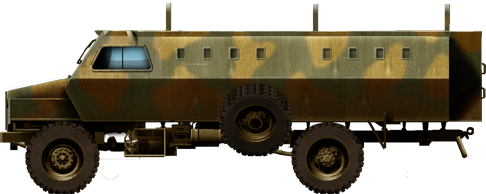
South Africa: Bosvark, MRAP Samil-50 Kwevoel RV, Ribbok, Hippo
Israel: Merkava, III, IV, M109A5 Doher/Rochev, Magach 5 Golan, M113 Golan/Zelda Toga (IDF service), M3 HT in IDF service, M50 AGM launcher, Eshel HaYarden, M2310 shilem
Britain: Vickers Mk.I MBT, Centurion AVRE, Light Mk.IV Colonial Pattern, Light Tank Mk.II, Wasp Carrier, Bren Carrier (update), FV430 Bulldog, FV105 Sultan, FV103 Spartan
USA: M548, M728 CRV, M40 155mm HMC, T12E1 CGMC, M15 Combination GMC, M13 MGMC, M12 155mm SPG, M14 MGMC, M17 MGMC, M39 Carrier, T1 Cunningham, M22 Locust, M3 HMC-75mm, M4 sherman flail, Marmon CTLS, Sherman-MkV-Crocodile, M108 SPG, LAV-300, M113 FIST, M106 MortarCarrier, M577 Command, M103, M110 howitzer
USSR/Russia: 9M317 BUK-M2, 9K330 Tor, 1S91-kvardat, 9K37M1 buk-M (SA-17-Grizzly), 2S35 Koalitsiya, BTT-1, MT-55, 9P157-2 Khrizantema-S, 9P163M-1-Kornet, 2S23 Nona SVK, BMO-T, BMP-2M, BMP-97 Vystrel, BTR-T, Ural Typhoon, R-381T-Taran, R-145BM, STZ-5 tractor/BM-13-16(Ni tank), Pioneer(Komomolets), T26T/BNSP reco vehicle/TP26, Ya12 tractor(T60/70), GT-MU soviet airborne APC, GAZ-2330 Tigr
China: Type 63G mod. light tank, VT4, Yitian-SPAAML, PLZ-07, PLZ-52, PGZ-07, PTL-02, Type 63C APC amphib Ukraine ready: BTR-60M Khorunzhy APC , BTR4 MV1
And also: LAV-6, M120 Rak, Archer, RODEF-4, Pereh-tank-destroyer, T34-D30-SPH, Iranian Rakhsh-APC, Patria II AMV, Light Tank Mark II, Mark III, Spanish AFVs interwar, TAB B33 Zimbru, Ford Lynx, Rhodesian Crocodile, Serge CDS, Jordan Khalid MBT, Jordan Al Hussein, Leonardo-M60 , wasserwerfer-SK2, BTR-152 vz53 SPAAG, MT-55, BTS-4A, BTS-2, Renault FT command, 370-Recoiless-GunsSPG, TC5000XYB
XMas Special !
Fill your basket, offer and delight your friends/family with brand new posters* of iconic tanks of WW2 to this day:
First of this new serie: All Tiger tanks liveries. See the free web version (10x smaller) and the Panther poster available here


More to come soon !
*Also available: Photo print, metal and canvas prints, postcards, mugs, bucket or dad hats, desk mat, baseball cap, t-shirts, tops, latptop or ipad/iphone skin, sleeves, cases, snap cases, but also acrylic blocks and wood mounted prints, taperstry, clocks, coasters, comforter, duvet, shower curtain, throw blanket, pillow, drawstring bag, tote or duffle bag, backpack, pin, scarf, socks, zipper pouch, hardcover journal and spiral notebook, apron and this Xmas 2023 novelty: A Jigsaw puzzle...